Friday, August 10, 2012

Turkey. Spice and all things nice!


You write a blog, expecting a few friends to read it, but never knowing quite how many are interested in what you have to say. So I am not sure how appropriate this latest blog offering is and whether readers will be particularly interested. Sure it is a promotion, but also an opportunity as I see it, so I hope you might read it and be interested. I am happy for feedback on this to know whether or not to repeat this kind of blog in the future?

Every now again I get to explore new destinations and invite folk to join me on a Recce Tour. Often I head-off into the unknown, accompanied by invited friends, to discover wild places in far off and exotic countries. A country I have frequently discussed and wished to visit is Turkey, in fact it became a bit of an obsession for me to get around to arranging a tour to this large and historically rich region. I began my research and tentative approaches to organising a visit back in April of this year, very soon I became excited by the potential of exploring birds in this diverse area.
Of course places on these tours are limited and often very popular with friends, so I would like to personally invite you to join me on this wonderful opportunity to explore the nature of Turkey. Below is a brief tour description, I hope you might be tempted and will be happy to send further information for your interest. Please do contact me as soon as possible, with only 2 places available I expect to fill this tour very quickly. I hope it might be you that can join me.


A bird shall know neither bounds nor confines of man, remaining a free spirit to brighten our lives, a symbol of peace, fostering friendships for those who share in their joy. Peter Jones

In Turkey birds from three bio-regions converge to reside, migrate or winter, demonstrating a blissful ignorance of political boundaries. Asia, Africa and Europe are represented by our birds on this recce tour, a real treat in store for all of us participating on our journey through mountains, marshlands, steppe and lakelands.
The first part of our tour visits Sultan Marsh; it is one of the largest and most important wetlands in Turkey as well as in the Middle East and Europe. The number of species of birds, both predators and warblers, that visit, winter or breed in this area, where fresh and saltwater ecosystems are found side by side, is around 250, with extremely high numbers of certain bird communities during the migration season. Populations of Flamingo reach 50.000, Shelduck 10.000 and ducks of various species 600.000.
From the Sultan Marsh we visit Aladağlar National Park, located north of Adana, it is a huge park of around 55,000 hectares and the summit of Demirkazik at 3756m is the highest point in the middle Taurus mountain range. There is a huge range of flora and fauna. Wildlife includes wild goats, bears, lynx and sable. Here we hope to find the elusive Caspian Snowcock, Radde’s and Alpine Accentors, Alpine and Red-billed Choughs, Crimson-winged Finch and White winged Snow finch.
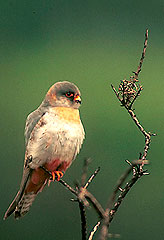
Onwards we visit the Goksu Delta, now a Specially Protected Area; this is one of the most important ornithological areas in the Western Palearctic region. Where the River Goksu enters the Mediterranean a large delta has developed and although much has been lost to agriculture the remainder hosts an outstanding collection of bird species. Some rather rare or local breeders such as Marbled Duck and Ferruginous Duck, Ruddy Shelduck, Black Francolin, Spur-winged Plover and Purple Swamphen, which, in Turkey, breeds only here. White-breasted Kingfisher and Pied Kingfisher both occur in this area and raptors include Egyptian Vulture and Griffon Vulture and Lesser Kestrel. Various herons breed in the reedbeds of Akgol along with Glossy Ibis and Eurasian Spoonbill, Black-winged Stilt, Pied Avocet and Collared Pratincole. White-tailed Plover has bred.
Our next main area to visit is Birecik – Euphrates River (Firat). The area is home to Bald Ibis, See-see Partridge, Pallid Scops Owl, Blue-cheeked Bee-eater, Bimaculated Lark, Upcher's and Ménétries's Warbler, Iraq Babbler, Dead Sea Sparrow, Chestnut-shouldered Petronia, Pale Rockfinch and Desert Finch. We will also visit the rolling hills and rocky cliffs along the Euphrates in search for Eastern Rock Nuthatch and Bonelli’s Eagle. Back in Birecik, we will visit the site for the colony of Iraq Babblers. Wow!
Finally we move to Isikli and Durnali areas. Brief views of a Cinereous Bunting are obtained in this area, whilst other species like the male Blue Rock Thrush, Eastern Black eared Wheatears and Eastern Rock Nuthatches. At the Durnali area it is possible to find Cinereous Buntings, Desert Finches, Turtle Doves, Eastern Black-eared Wheatears, Greenfinches and Eastern Rock Nuthatches. After exploring the fascinating areas of Isikli and Durnali we drive back to Gaziantep.
I think this tour will provide unequalled opportunities for enjoying great scenery, locations and of course birds from 3 continents. I hope you will join me.


To download the information sheet on this Recce Tour see: HERE
To request further information follow this link CONTACT US
To reserve your place follow this link BookOnline

Thursday, August 9, 2012

Strange beginnings!


A weird year so far!

It had been a busy spring, full blown tours and never a dull moment on my local day trips around my mountains here in the Serranía de Ronda, no complaints from me, its been a record year for bookings, but it certainly made time fly by and already we are in the summer months under blue skies and a very hot sun. Certain things stick in mind from April through to the middle of May, namely the unpredictable weather, a strange year so far. Flowers were late, orchids were patchy and some of our migrant birds also chose to delay their appearance, or at least in anything like their normal numbers.


Cold days and rain punctuated the passing of April and a tragedy unfolded as the month wore on. Sure the rains were welcomed by all, the flowers certainly livened-up and the countryside began the transition from multicoloured hues to more greens, but together with the rains, the cold meant a severe lack of insects. I picked-up several dead Bee Eaters around local areas, all showed signs of starvation with breast bones needle sharp and no visible fat, I can only surmise the lack of insects, after such long uninterrupted journeys, led to these beautiful birds perishing at the final hurdle of their migration.

Although it has to be said it was an enjoyable experience for all concerned, it remained a strange mixture of good and bad news for wildlife this year. A very dry winter meant late flowering plants leading to a lack of insects, which led to food shortages for early arriving birds reliant on a good food sources after their long passage from Africa, an unusual year so far…. and now we have birds arriving early on their journey south for the winter, in large part due to such a wet summer in Northern Europe, who said life is dull?

See full illustrated article on this link: Back over my shoulder

To join me on day tours here and learn a little more about my area, please visit my tour page: Serrania de Ronda


Monday, June 18, 2012

Albino Stonechat - Major rarity, Major find!


Quote "Our guide Peter Jones gives an account of his remarkable encounter with an extremely rare albino Stonechat Saxicola rubicola, an unexpected occurrence on one of his famous day tours in the areas of the Serranía de Ronda and Sierra de Grazalema, Andalucia, Spain. Of course Spanish Nature day tours are renowned for providing wonderfully exciting days throughout Andalucia, here in the Serranía de Ronda it is particularly true with frequent sightings of Rüppell’s Vulture and Long-legged Buzzard, both very rare in our part of the world, but nothing quite prepared Peter for the sighting of what he originally thought was tissue paper snagged on a briar of bramble!" Spanish Nature
A real lucky and extremely rare find.
Wow, always something to surprise me. Here I stumbled upon a true albino young Stonechat Saxicola rubicola, so very rare and privileged to have been witness to this so unusual occurrence! See video and article here: Albino Stonechat video and article

For day tours with Peter see here:

Wednesday, June 6, 2012

Iberia Bird Festival - 2012


A novel and innovative concept for showcasing wildlife in Iberia has recently hit the ground running! Of course there are many festivals and fairs where we might wander along to and enjoy meeting-up with fellow nature enthusiasts, but I really like the idea and concept of the Iberia Bird Festival. It is a kind of travelling show, focusing on areas where birdlife is a rich and diverse resource, but has been largely missed on most birder’s radar. Almería is the region chosen for the very first festival of its kind and deserves its chance to promote itself to the nature loving public. It is a region that has suffered from a lack of any meaningful promotional investment by the powers that be for southern Spain, where both the focus and funding tends to concentrate on already known areas such as the Doñana (Seville) and Strait of Gibraltar.


Iberia Bird Festival sets out to be different. The festivals are non profit in so far as any surplus revenues are donated to a single nature project or charity each year. The organisers are passionate about our wildlife and want to be able to contribute to the preservation and conservation of birds in particular. IBF will hold the festival at a different location each year, not only to raise awareness of birds in various regions, but also to give visitors opportunities to see and learn about the great diversity of Iberia. The chosen project the festival will support for 2012 is the Osprey Migration Foundation, for details of the project see this link.


Iberia is collectively a veritable mecca for those of us that love nature. There are so many areas within the peninsula that are absolute jewels for nature in general, but in particular for birds. From some of the highest mountain ranges in Europe, to wide and expansive wetlands, steppe country and at its southern most tip the famous Strait of Gibraltar, the western European highway for birds passing to and fro on migration between Europe and Africa. The Iberia Bird Festival is an annual event, visiting a new location each year, supporting worthwhile causes for nature involving educational and conservation projects. They very much hope to welcome you to a celebration of the birds in Iberia at one, if not all, of their festivals. Entrance to this year’s festival in Almería is FREE!

•  All festivals include daily excursions to wild places.

•  Internationally famed authorities on nature give lectures on their particular speciality.

•  Exhibitors for nature goods, photography and travel will be showing their wares. 

•  Local guided tours available and the tour descriptions and costs will appear on the official website: Iberia Bird Festival

•  Music and parties each evening for the duration of the festival, tickets available at the festival. 

•  All net profits from the festival will be donated to a single educational or conservation project.


The venue and home for the festival in 2012 is Rodalquilar, starting 7th to 9th September, in the heart of the Parque Natural Cabo de Gata, it is the largest terrestrial-maritime reserve in the European Western Mediterranean Sea, covering 460 km² including the town of Carboneras, the mountain range of Sierra de Cabo de Gata, and 120 km² of the sea as a part of a Marine reserve. Hosting the festival for 2012 is the splendid Hotel Naturaleza Rodalquilar, close to the village of the same name and the head offices for the Parque Natural. The surrounding area is a protected nature reserve and has a plant list of over 1000 species as well as many much sought after birds such as Dupont's Lark and Trumpeter Finch. It promises to be a memorable year for the organisers and all who visit this year’s Iberia Bird Festival. The main partner with organising and promoting the festival this year is Hotel Rodalquilar. As a local and well respected company, the organisers of IBF could not wish for better partners during this year's festival. Their philosophy is more than just a business; it is a passion, a dedication to the portraying of values and emotions by means of environmental education, heritage interpretation and nature tourism.


The 2012 festival will not only be a celebration of our birds, but is also the 25th Anniversary of the Natural Park Cabo de Gata. Sounds to me like a very good excuse for a party! The Park will have their own stand at the festival, their offices and an extremely interesting museum are just a short walk away from the main IBF venue.


Main Link for the Iberia Bird Festival - IBF

Saturday, June 2, 2012

Nature's funny moments.


Startled, but who is the Spotted Owlet or us? 
Encounters of the smiley kind!
A look back over WBT tours so far this year.

Most folk who have spent time in the wilds and watching nature at firsthand will no doubt have had a tale or two to tell about unusual encounters. For me, looking through various tour photographs, I thought I’d share a few of the more amusing snaps taken so far this year. They made me smile and may they also bring a smile or two to you! It is always great to remember moments of our tours, normally there are so many superb moments on each of the many tours, but the bizarre or chance encounter, strange expressions or behaviour of our wonderful nature just seem to stick in one’s mind.

I hope you enjoy this small collection of my abiding memories so far this year…


If you would like to see more, please leave a comment and if enough folk are willing to suffer, I will post some more photos in the future.

You can be sure this terrier would have been happy the anteater didn't stop!
Costa Rica Tour. Photo: Norman Cook

Makeup on, this Verreaux's-Eagle-Owl is ready for going out on the town.

Mud Skipper - Burping or singing I'm forever blowing bubbles?

Hyacinth Macaw smiling & dribbling at the waterhole.

Bloody pesky insects!

What me? It wasn't me who broke wind honest....

Gotcha, but now what do I do???

Where did that bloody photographer go?

Fierce predator? No way, just a an over-grown softy!

Watching you watching me...

Upland Buzzard thinks camera & cameraman are a rabbit...

I hope you enjoyed this small collection, if you would like to see more, please leave a comment and if enough folk are willing to suffer, I will post more.

For all featured tours and more, please visit Worldwide Birding Tours